
May Roundup: Waiting for the Subsidy Deal, the MOU, and the "Conceptual" Program
Coverage of project transparency, Brooklyn Sports & Entertainment, and the Tsais' Social Justice Fund. Shouldn't the operators of MSG and Barclays pay taxes?

It’s been six weeks since my last collection of articles, published on April 9.
A lot has happened, notably the release at the end of April of a Final Community Engagement Report that, while essentially endorsing new project plans from developers Cirrus Workforce Housing and LCOR, at least addressed some questions.

Notably, when asked about a reported request for a $350 million subsidy to support a platform needed for vertical development over the two-block railyard, Empire State Development (ESD), the state authority that oversees/shepherds the project, responded that “[v]ery significant public subsidy is required.”
We still haven’t seen the delayed state budget, but I wouldn’t be surprised if the latest subsidy request, reported at $175 million, represents not a cut but a restructuring. (Simply cutting it in half is a little neat, right?)

Let’s see what emerges this week, when the legislature finally finishes the budget. But why should the public offer subsidies before we even know the proposed project dimensions, timetable, or oversight structure?
What else we’re waiting for
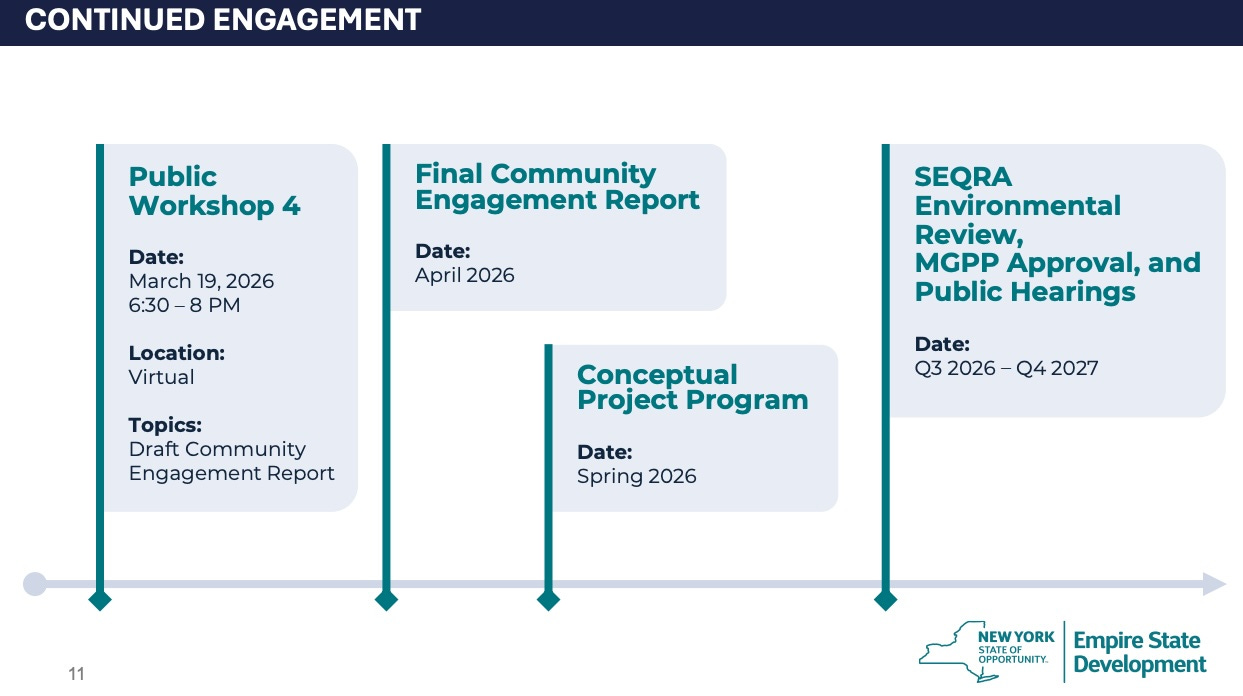
According to the March 19 public workshop (see screenshot below), the Final Community Engagement Report was due in April. They made it just under the wire.
The “Conceptual Project Program,” which presumably sketches the project’s proposed scale and timing, was said to be due this Spring, meaning by June 21.
The lack of such a conceptual program means we must, for now, rely on the unofficial effort below by my longtime collaborator Ben Keel.
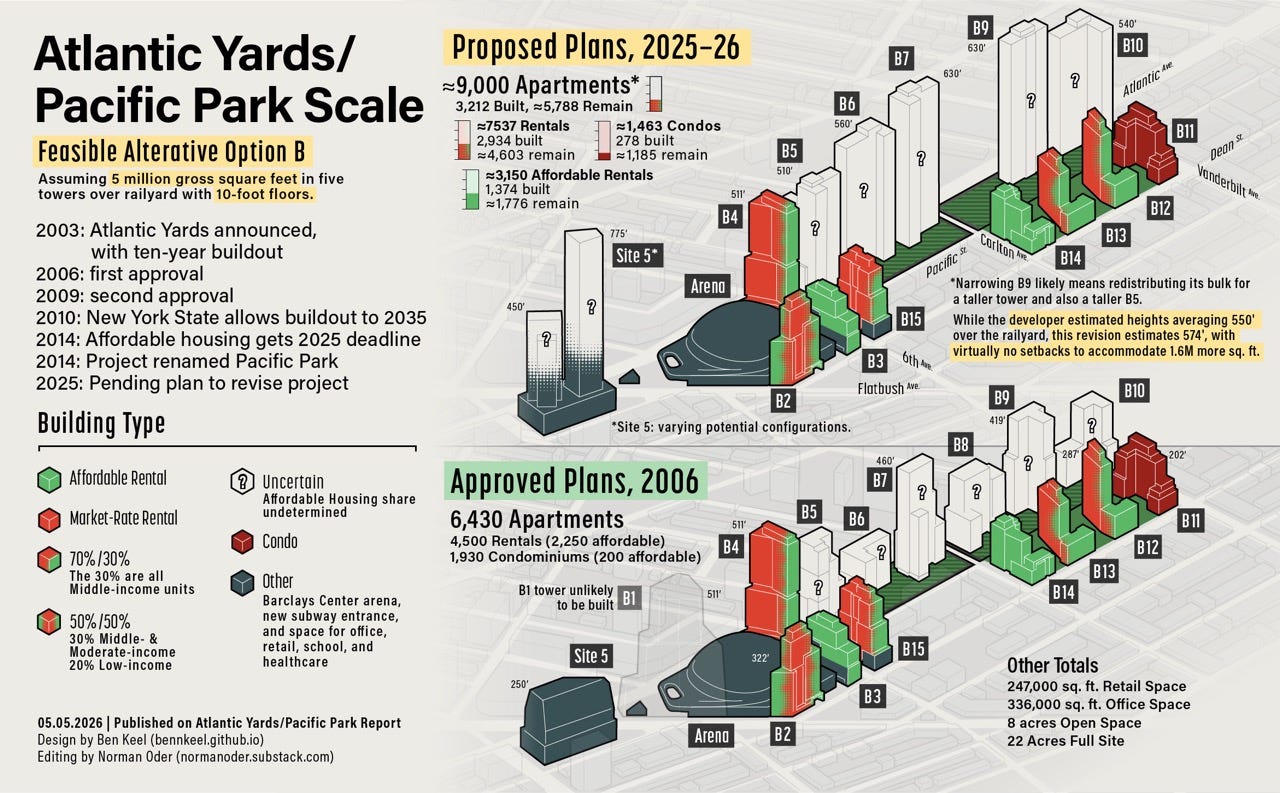
I wouldn’t bet on that Spring deadline, as timelines with Atlantic Yards tend to stretch.
Consider that the non-binding Memorandum of Understanding (MOU) between the developers and the ESD, regarding project terms such as scale, affordability, and timing, isn’t due until July 31.
ESD, I learned through a Freedom of Information Law request, has agreed to sign that document “provided it results in a project which is viable, as determined by ESD, in its sole discretion.” As I wrote, I think that’s shortsighted.

So, will the public approval process begin in the third quarter of this year? Maybe, but it won’t happen in early July, I’d bet.
More context about the project
Is the headline below a stretch? Not really. It’s not theft, of course, but the public deserves to know the value of the free bulk requested.

At Flatbush and DeKalb avenues, something very large is coming. But I’m not sure that means that the Site 5 parcel, opposite the arena, should be developed similarly.

If you believed some accounts, a contested parcel in Crown Heights would never find a buyer and builder. In reality, there’s usually a number.

It’s not a direct parallel to Atlantic Yards, but the Hudson Yards plan deserves attention.

Note the unsurprisingly boosterish Crain’s New York Business essay by the developer of Hudson Yards: Op-ed: Hudson Yards expansion is good for NY, says Related CEO Jeff Blau:
But our plan to use this payment in lieu of taxes program to support the infrastructure on the western yards is in no way a gift to Related; zero money comes from the city upfront. Only the future incremental taxes created by the development itself are utilized for the bonds to move this project forward. And as the site sits empty, it currently delivers no real estate taxes.
Well, is that the only choice? What about the opportunity cost?
Note this, too: “We’ve seen what happens when promises are made and not delivered. Look at Atlantic Yards.”
When the Related CEO calls out Atlantic Yards as a cautionary tale, the Brooklyn project has a reputation problem. Note: Related was negotiating to take over Atlantic Yards and seemed to be in the driver’s seat, only to pull out by early 2025.
Also see my coverage April 20: One more contract for ESD, with law firm Carter Ledyard, for transactional documents in new project plan.
Around the arena
Would you believe that BK MAG, owned by arena operator Brooklyn Sports & Entertainment, might not want to explain why Freddy’s Bar, which operated on what’s now the arena block parcel, was ejected from Prospect Heights?

Though Streetsblog called my article below NIMBY, I don’t have a dog in this fight. This all should be looked at more holistically, including the impact of future construction and scofflaw NYPD/FDNY parking.

The Social Justice Fund
Last month, I published several articles about the Social Justice Fund of the Joe and Clara Tsai Foundation, supported by the owners of the Brooklyn Nets, New York Liberty, and arena company, founded in the wake of the #BlackLivesMatter protests of 202.
The Social Justice Fund claims to have spent $5 million a year but offers murky, incomplete documentation.
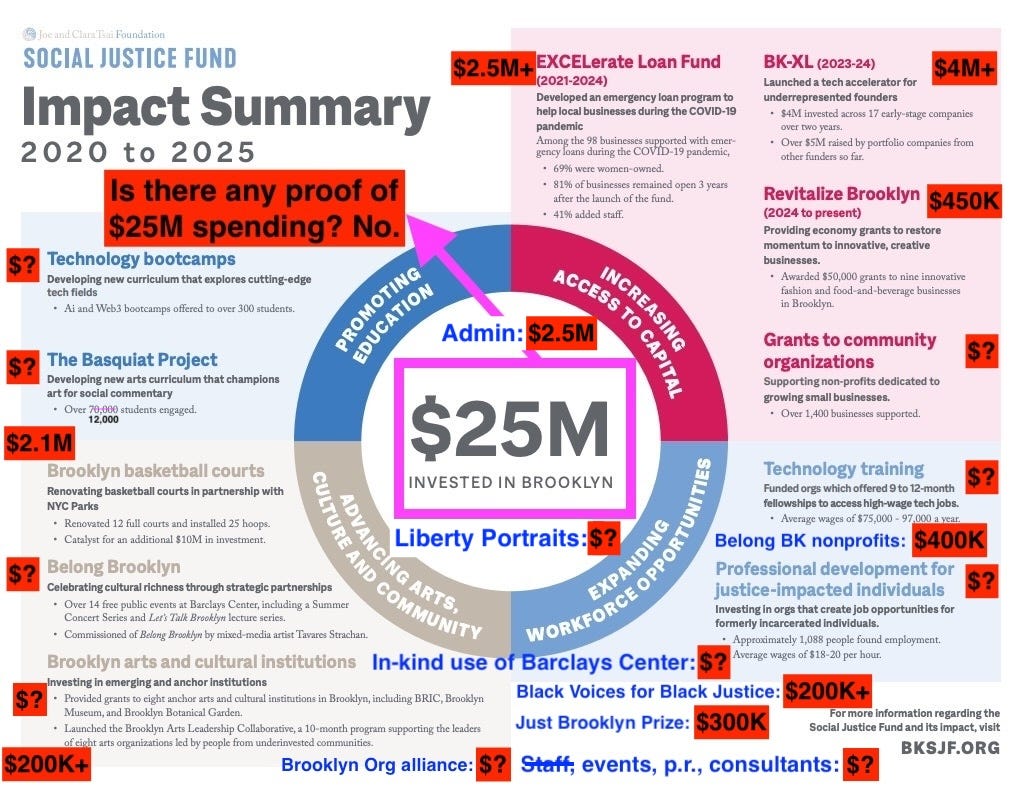
It’s certainly done good works, but “lasting change” may be a stretch. It’s also brand management for the Tsais, especially since the money spent helps divert recognition of the enormous tax benefits and other public largesse that have supercharged the value of their properties.1

In the article below, I tried to catalog all their announced programs and spending.

Their much-promoted loan program helped numerous business owners recover from the pandemic. What’s curious is what came next.

The BK-XL start-up program also generated significant publicity. But it didn’t turn out as expected.

The social justice efforts were initially attributed to both Joe Tsai and Clara Wu Tsai. That’s changed, seemingly for strategic reasons.

It’s a long way from 2020, as a comparison of the Social Justice Fund’s rhetoric shows.

At the arena
Public funds and assistance helped build the Barclays Center and provided a home for increasingly valuable teams. Doesn’t the public deserve more?

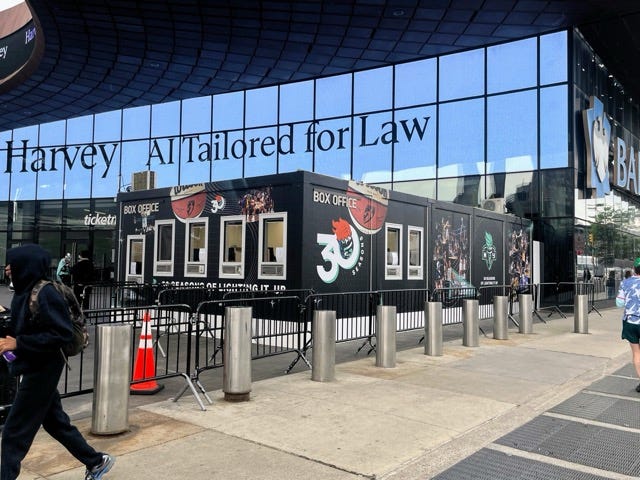
The plaza’s not always public. It even has a temporary box office, festooned with New York Liberty logos.

Most people grin and bear dealing with Ticketmaster, but a jury verdict sends a message.

How transparent are the arena operators? Not so much.

More news about Brooklyn Sports & Entertainment
Also see a couple of articles published in my long-running Atlantic Yards/Pacific Park Report blog. (I’ve transitioned most coverage here to this Substack.)
April 25: Is Type.Set.Brooklyn kaput? Brooklyn Sports & Entertainment youth media brand had its last update three months ago.
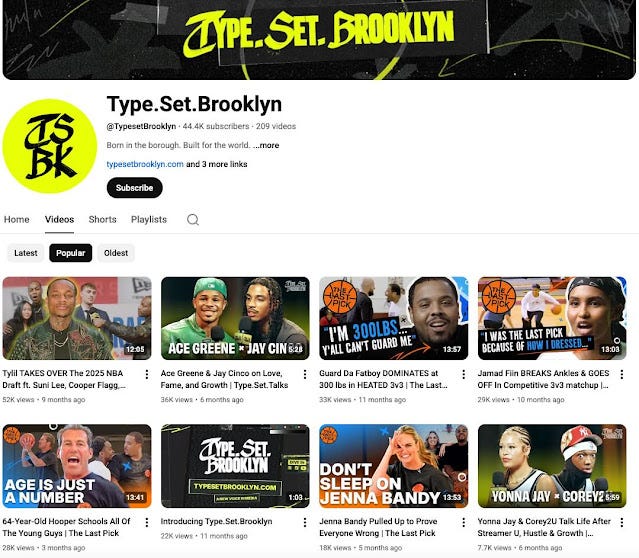
I was right, as Adweek later confirmed, bizarrely claiming a scoop. The parent company told Adweek they’re focusing on BK MAG, which is more of a local media outlet.
May 7: Brooklyn Sports & Entertainment will bring Casa Tua’s Cucina--high-end food court, bar, market--to One Hanson in 2027. That’s the base of the former Williamsburgh Savings Bank tower.
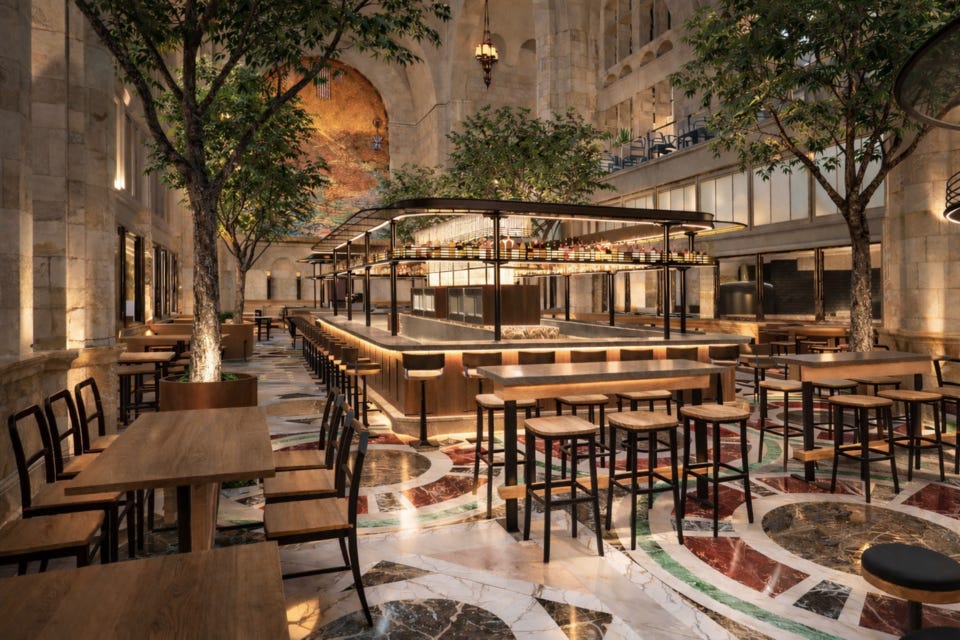
This is part of the “ecosystem” of events and hospitality in Brooklyn planned by Brooklyn Sports & Entertainment. It’s an interesting concept.
About the Knicks (and the Nets)
The New York Knicks have had a galvanizing playoff run and are now in the NBA Finals. Congrats to the players, but it’s a sports entertainment corporation, not a public trust. Ticket prices are through the roof.
From Culture of Sport, The Knicks’ Playoff Run Is Turning Madison Square Garden Into a $140 Million Business Event:
According to RealGM, citing Seaport Research Partners analyst David Joyce, the Knicks’ current playoff run could generate more than $140 million in gross revenue for Madison Square Garden Sports, with the longest possible route pushing that figure towards $180 million.
Yes, that’s gross revenue, not net, but that further weakens the unsupportable case for a tax-exempt MSG site. Same for Barclays Center, Citi Field, and Yankee Stadium.


More reading
A couple of other articles of note:
New York magazine’s The Cut can’t resist the New York Liberty hype. (Though, for now, the team is struggling.)
A New Yorker profile of House Minority Leader Hakeem Jeffries, in a paragraph on his successful 2006 Brooklyn Assembly run, lets his campaign manager summarize it: “Jeffries handled Atlantic Yards the way Jeffries handles most things: very strategically.” Maybe even slippery, but that gets omitted in a run of generally positive profiles.
The Koch family owns 15% of Brooklyn Sports & Entertainment, an investment that has helped fuel the significant increase in valuation.